


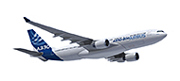
AIRBUS A330 NAVIGATION + EFB (ATA 34 + 46 ) MODIFICATIONS (73)
Anti-Jamming & Spoofing – GNSS Resilience for Airbus A320 and A330 aircraft


Prevent signal loss and spoofing threats before they disrupt your operations.
This fully certifiable solution offers real-time protection against GNSS jamming and spoofing for commercial and military aircraft.
Solution highlights
-
Real-time jamming and spoofing mitigation
-
CRPA antenna technology (multi-element array)
-
Compatible with existing GNSS and FMS setups
-
Available as complete turnkey retrofit kit
-
STC development available for multiple aircraft types
-
Compliant with latest EASA/FAA guidance
Benefits
-
Improved operational safety in GPS-contested environments
-
Protects RNP, LPV and GNSS-based navigation continuity
-
Enables compliance with evolving global regulations
-
Supports predictive navigation integrity monitoring
Installation & Certification
Offered as a Part 21J-certified modification, fully customizable for your fleet. STC paths available for Airbus, Boeing, Embraer, and others.
Looking to future-proof your fleet against GNSS disruption?
Get in touch to discuss a tailored solution or request STC availability for your aircraft type.
Installation of the Class 2 Electronic Flight Bag provisions (1)
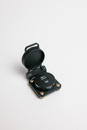
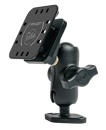
The EFB Solution for iPad® is a very interesting and cost effective way to introduce an installed classified EFB in your cockpit. An EFB is a physical device containing hardware and software that carries flight documentation. The EFB is used by the flight crew on the flight deck during their duties. Fokker Services’ EFB modification has already been installed in more than 1500 aircraft amongst different aircraft types. Our EFB installation is ticking all the boxes and is available for most aircraft types, including Airbus, Boeing, ATR, Bombardier Challenger & CRJ Family, Embraer, Fokker and others. We can support you with all hardware for your power supply (USB-A and USB-C) and iPad mount (adjustable and pivot mount), our product includes an Engineering Bulletin and all related supplements.
ADS-B Out on A330


Automatic Dependent Surveillance- Broadcast (ADS-B) is the replacement and augmentation of RADAR-based aircraft surveillance technology. With ADS-B, the surveillance of aircraft does no longer rely on RADAR ground stations, but on aircraft based GPS receivers. Aircraft equipped with ADS-B broadcast their precise position and velocity data, as well as altitude and supportive information automatically and with no pilot or external input to ATC or to other aircraft.
Installation of a Talon Aerospace Anti-Collision Light (4)
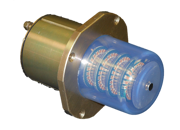
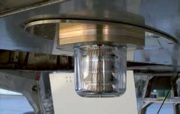
The 1st FAA Certified LED Anti-Collision Light for Commercial Aircraft
Dependability, Weight Savings and Inventory Reduction
The Talon Aerospace anti-collision centerline/fuselage strobe light is designed to replace all incandescent based centerline lights installed on Boeing, Airbus, McDonnell/Douglas, Embraer, Bombardier and other regional aircraft.
During retrofit the operator will purchase an install kit, which includes an adaptor and harness assembly. On airframes that have accessibility provisions inside the interior the upper centerline light allows removal from inside the cabin. The harness and adaptor will last the lifetime of the airframe.
Talon and Proponent
Proponent is the exclusive global distributor of all Talon Aerospace products. This relation provides customers with the latest generation of LED lights.
Proponent is the new identity representing Kapco Global and Avio-Diepen as one united company, and the unique capabilities that the new organization brings to the aerospace market. With extensive experience in supporting the MRO, OEM and airline markets, our organization offers innovative inventory and supply chain management solutions to OEM and aftermarket customers.
ADS-B Out on Airbus A330-200/-300 series aircraft

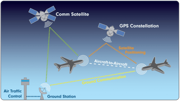
ADS-B Out signal is used for surveillance purposes on the ground or onboard other aircraft in order to facilitate airborne traffic.
ADS-B, standing for “Automatic Dependant Surveillance – Broadcast”, is the replacement and augmentation of radar-based aircraft surveillance systems. With ADS-B, the surveillance of aircraft does no longer rely on radar ground stations, but on airborne GPS receivers. Aircraft equipped with ADS-B broadcast their precise position and velocity data, as well as altitude and supportive information automatically, without pilot input, to ATC on ground (ADS-B Out) or to other aircraft (ADS-B In).
Installation of a DK180 Dukane Underwater Acoustic Beacon (LF-ULD )

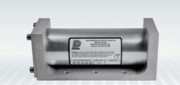
Dukane Seacom’s DK180 is designed and certified to meet the newly developed standards FAA TSO-C200a, TSO-C142a.
The DK180 also meets SAE-AS6254a minimum performance standard for Low Frequency Underwater Locator Devices (acoustic, self-powered) & the ARINC-677 installation standard.
In the event of an accident at sea, the DK180 emits a low frequency signal (8.8kHz) in order to provide anextended detection range in locating the submerged aircraft. The beacon transmits for a minimum of 90days and acts as a supplement to the existing Underwater Locating Devices (ULD) which are attached directly to the flight and data recorders.
- Watertight aluminum case (2” dia, 6” length).
- Capable of operation at depths of up to 20,000 feet(6096 m)
- Detectable underwater up to 7.0-12.0 NM ( 13-22 km) based on environmental factors.
- Sustained pressure up to 8700 psi.
Certified DE-modification of Obsolete or Custom STC Installations

As part of lease return, phase-out, or aircraft transition processes, removal or reversal of previously installed STCs is often required. These could include obsolete systems, lessee-specific modifications, or customer-tailored configurations no longer applicable for the next operator.
Fokker Services provides certified engineering support for the full demodification process, ensuring compliance, traceability, and airworthiness restoration aligned with the requirements of the new lessee or owner.
USB charging port installation in cockpit
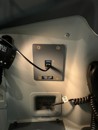
This change installs USB charging ports in the cockpit for crew use.
Underwater Locator Device - ULD (6)
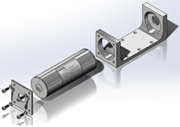

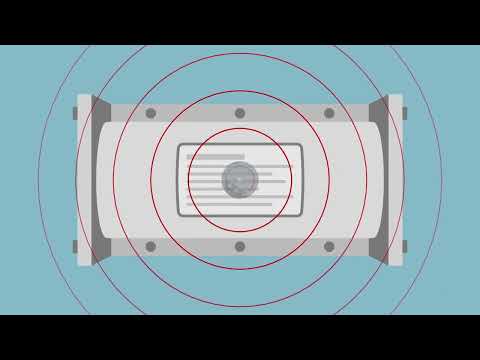
Events related to aircraft missing over oceanic areas have led to several new requirements, amongst which is the introduction of a stand-alone long-range Underwater Locator Device (ULD). Based on this requirement, we are pleased to provide you our offer, which is based on the delivery an integrated package including all related documentation and materials. Note that the ULD is not to be confused with the Underwater Locator Beacons (ULB) as installed on the CVR and FDRs. The ULD is complementary to the ULB and is mounted to the aircraft structure.
Our ULD mod will be mounted on the aircraft structure free of sound absorbent materials and not in wing sections or empennage, we certified multiple locations in a variety of aircraft types. The installation is in accordance with ARINC specification 667, which describes the removal, installation and maintenance aspects of an ULD installation.
